PLANTS
What to grow in Pakistan's big cities
Karachi, Quetta and Multan could hardly be more different. Here is a city by city guide to what grows well, and what to watch out for.
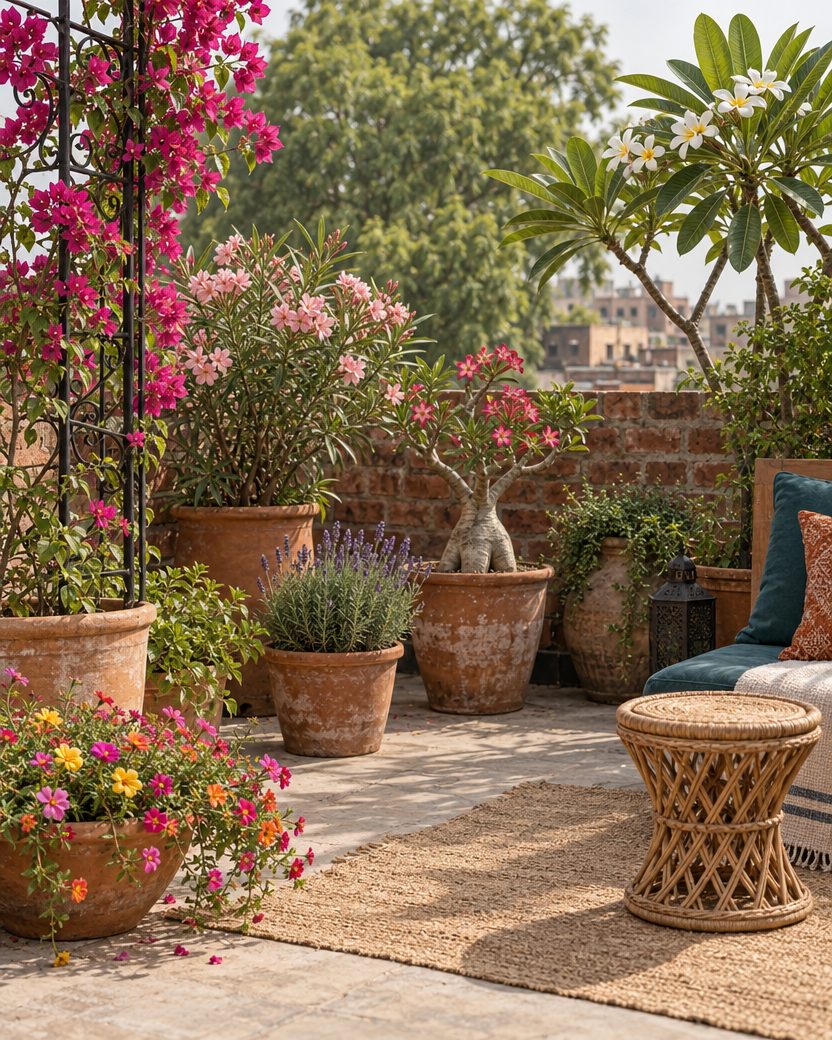
A plant that is perfectly happy on a Karachi balcony may not survive a Quetta winter. Pakistan's cities have very different weather, so instead of one list, here is a guide to eight of them, built on each city's own climate.
A quick safety note first. Two of the toughest plants on this list are poisonous. Oleander is highly toxic and can be fatal if eaten, and every part of it is poisonous. Desert rose has a milky sap that irritates the skin and is poisonous if swallowed. Both are beautiful, but keep them away from small children and pets.
Karachi
Karachi has a semi arid climate softened by the Arabian Sea. Winters are mild, with January nights averaging about 13°C, and the coldest temperature ever recorded was 0°C, back in 1934. May and June are the hottest months, and the air stays humid from March to November.
What grows well: bougainvillea and oleander, which both handle heat, drought and salty sea air. Champa (plumeria) is a tropical tree that loves the warmth, though it may drop its leaves in a long dry spell. Desert rose is happier in Karachi than almost anywhere else in Pakistan, because it does not like the cold. Bring it indoors only when nights fall to about 13°C.
Watch out for: salty sea wind. For open, sea facing balconies, choose salt tolerant plants.
Choose plants that suit your city, rather than fighting it.
Lahore
We have a whole post on this one. In short, June highs regularly go above 40°C and July brings the heaviest monsoon rain, so plants need to cope with both heat and wet roots. Read Plants that can handle a Lahore summer for our full list.
Islamabad
Islamabad has a humid subtropical climate and plenty of rain, about 1,260 mm a year, with July and August the wettest months. Winters are properly cold. January nights can drop below freezing, and the record low is 6°C below zero. June is the hottest month, with days averaging about 38°C.
What grows well: lavender. It is drought tolerant and copes well with cold, as long as its roots never sit in water. Grow it in pots or raised beds with gritty soil so the monsoon cannot rot it.
Watch out for: frost. Bougainvillea is frost sensitive and oleander is damaged at freezing, so move potted ones to a sheltered spot on cold nights. And skip paper mulberry. Its pollen is linked to Islamabad's spring allergy season, and the CDA has been removing these trees and planting native ones instead.
Peshawar
Peshawar sits in a low valley with a semi arid climate. Summers are long and fierce, with highs often above 42°C, and winter nights average about 4°C. Most of the rain comes in late winter and spring, and March is the wettest month. Peshawar has long been called the city of flowers, and the old name of its valley, Gandhara, is said to mean land of fragrance.
What grows well: sow cool season flowers like sweet alyssum in autumn so they bloom through the mild, rainy spring, before the heat arrives. For summer, heat tough climbers like bougainvillea do well.
Watch out for: the occasional frost. The city's record low is close to 4°C below zero.
Quetta
Quetta is the highest major city in Pakistan, at about 1,680 metres, with a cold semi arid climate. Winters bring snow, around 56 cm a year, and the record low is a bitter 18°C below zero. Summers are mild, averaging 24 to 26°C. There is no monsoon, and the city gets only about 300 mm of rain a year. Quetta is known as the Fruit Garden of Pakistan for its many orchards.
What grows well: cold hardy, drought tolerant plants. Lavender handles hard winters and loves dry, well drained soil. Orchard fruit trees are part of the city's identity.
Watch out for: water. Quetta depends almost entirely on groundwater, and the water table has been falling by two to five metres a year. Water early in the morning, cover the soil in your pots and beds with mulch, and choose plants that ask for little. Keep frost tender plants like bougainvillea, oleander, champa and desert rose indoors in winter, or skip them.
Multan
Multan is one of the hottest cities in the country, with a hot semi arid climate. In June, temperatures average around 46°C, and the record is 51°C, set in May 2010. Dust storms are common in May and June, and they can be violent. Winters are cool, with January nights around 4.5°C. Multan is famous as the city of mangoes.
What grows well: plants built for heat and drought. Desert rose, bougainvillea and oleander all cope with long dry spells once established. Portulaca is a cheerful, heat loving flower for pots.
Watch out for: dust. After a dust storm, rinse the leaves gently with water. Give pots some afternoon shade in June.
Faisalabad
Faisalabad's climate sits between semi arid and humid subtropical, with very hot, humid summers and dry, cool winters. May and June are the hottest months, and the record high is 48°C. About half of the year's rain falls in the monsoon, with July the wettest month. January nights average about 5°C, and the record low is 4°C below zero.
What grows well: much the same as Lahore. Bougainvillea, portulaca and lantana for sun, in pots that drain well for the monsoon.
Watch out for: frost on the coldest January nights. Bring tender pots under cover.
Hyderabad
Hyderabad has a subtropical semi arid climate. Days are hot and dry, usually around 40°C, and the record is 49.5°C, from June 2016. The nights are its gift: the evening breeze is cool and pleasant. Old Hyderabad was known as the city of windcatchers, because so many houses had a tall mangh on the roof to pull the cool breeze down into each room. Rain is light, around 320 mm a year, most of it in the monsoon.
What grows well: heat and drought tough plants like bougainvillea, desert rose, oleander and portulaca.
Watch out for: dusty daytime winds. Place delicate plants where the evening breeze reaches them, but out of the hot afternoon wind.
One rule for every city
Check the soil before you water, use pots with drainage holes, and choose plants that suit your city rather than fighting it. If you are not sure what will thrive in your space, send us a photo on WhatsApp. We deliver plants in Lahore, and we are always happy to share advice wherever you are.
FURTHER READING
- Climate of Karachi, Wikipedia
- Climate of Islamabad, Wikipedia
- Climate of Peshawar, Wikipedia
- Quetta, Wikipedia
- Climate of Multan, Wikipedia
- Climate of Faisalabad, Wikipedia
- Climate of Hyderabad, Sindh, Wikipedia
- Quetta's water crisis worsens as groundwater depletes, Dawn
- CDA plans to remove all mulberry trees from Islamabad, Dawn
- Why Pakistan's once blooming city of flowers is wilting, The National
- Back to the basics: wind catchers of Hyderabad, The Friday Times
- Oleander, NC State Extension
- Desert rose, NC State Extension
- Bougainvillea, NC State Extension
- Lavender, NC State Extension
- Plumeria rubra, National Tropical Botanical Garden
- Portulaca, NC State Extension
- Sweet alyssum, NC State Extension
- Multan: the mango city, MNS University of Agriculture, Multan
Want help with yours?
Message us on WhatsApp